Ergonomics, Anthropometrics and Proxemics
- Shvani Sivanalagan
- Jan 3, 2023
- 2 min read

Updated: Jan 9, 2023
'Ergonomics aims to design appliances, technical systems and tasks in such a way as to improve human safety, health, comfort and performance' (Dul and Weerdmeester, 2008, p.1) Ergonomics in design is how well a design is efficient, this includes the equipment and furniture that is comfortable and practical for people's use. Military forces introduced ergonomics to increase productivity and decrease the strain on soldiers during World War II.
Principles of Ergonomics
1) Neutral posture
2) Reduce body strain
3) Keeping things within reach
Anthropometrics is the study of body measurements, providing categorised data which is then used when design designing furniture and machinery by designers. The ancient culturally used anthropometric measurements 'to represent beauty, power and other attributes of the human form.' Symmetry was desired, therefore precise measurements involved the 'width of a human hand' or 'length of a human foot.' Measurements are static as well as dynamic which means architects have to collect measurements of when and how human movies in a particular space. Anthropometrics is exclusively about how the body adapts rather than how the body adapts to the design. In conclusion, the study of anthropometry improves design to fit our body's comfort.
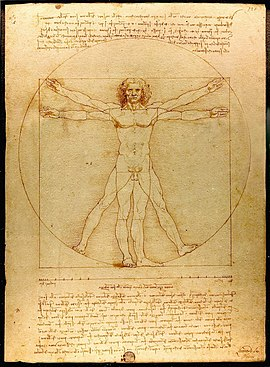
The Vitruvian Man is an illustration of an idea claiming that a human figure can be fitted into a circle and a square by Leonardo da Vinci.
Proxemics outlines a person's bubble and personal space. It’s the study of people's interaction broken down into four zones, public (12ft+), social (4-12ft), personal (2-4ft) and intimate zone (0-2ft). This gives people a guide to go by to respect each other's boundaries. In architecture and interior design, phenomenology covers the body’s experience in a space, which links to ergonomics, anthropometrics and proxemics as the topic studies the body, so interior space is designed according to the body dimensions. There can be problems that arise when it comes to dimensions as usually public and private spaces are designed for the average man.
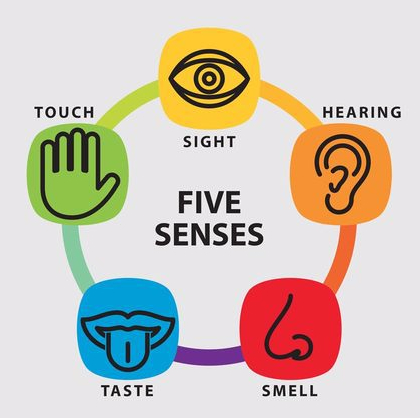
In this topic, I like how the importance of design adapting to the body is emphasised and helps us have a deeper understanding of the link between the body and the space. For example, for our adaptive reuse project, we are designing an exhibition for a chosen client and this topic had me think about people's interaction as they are manoeuvring. Whether there is enough space around each section of the exhibition. Whether all the items are within reach to see, touch or listen to.
References:
Dul, J. (2017). Ergonomics for beginners - a quick reference guide, third edition. Taylor & Francis Ltd.
Things about Anthropometrics to Keep in Mind While Designing! (n.d.). Gharpedia.com. from https://gharpedia.com/blog/tips-of-anthropometrics-while-designing/#:~:text=Anthropometry%20in%20design%20aims%20to
Vitruvian Man. Ohiostate.pressbooks.pub. https://ohiostate.pressbooks.pub/exploringarchitectureandlandscape/chapter/vitruvian-man/
Anthropometry In Architecture Design | Urban Design Lab. (2022, January 26). https://urbandesignlab.in/anthropometry-in-architecture-design-urban-design-lab/#:~:text=Anthropometrics%20is%20a%20type%20of
Comments